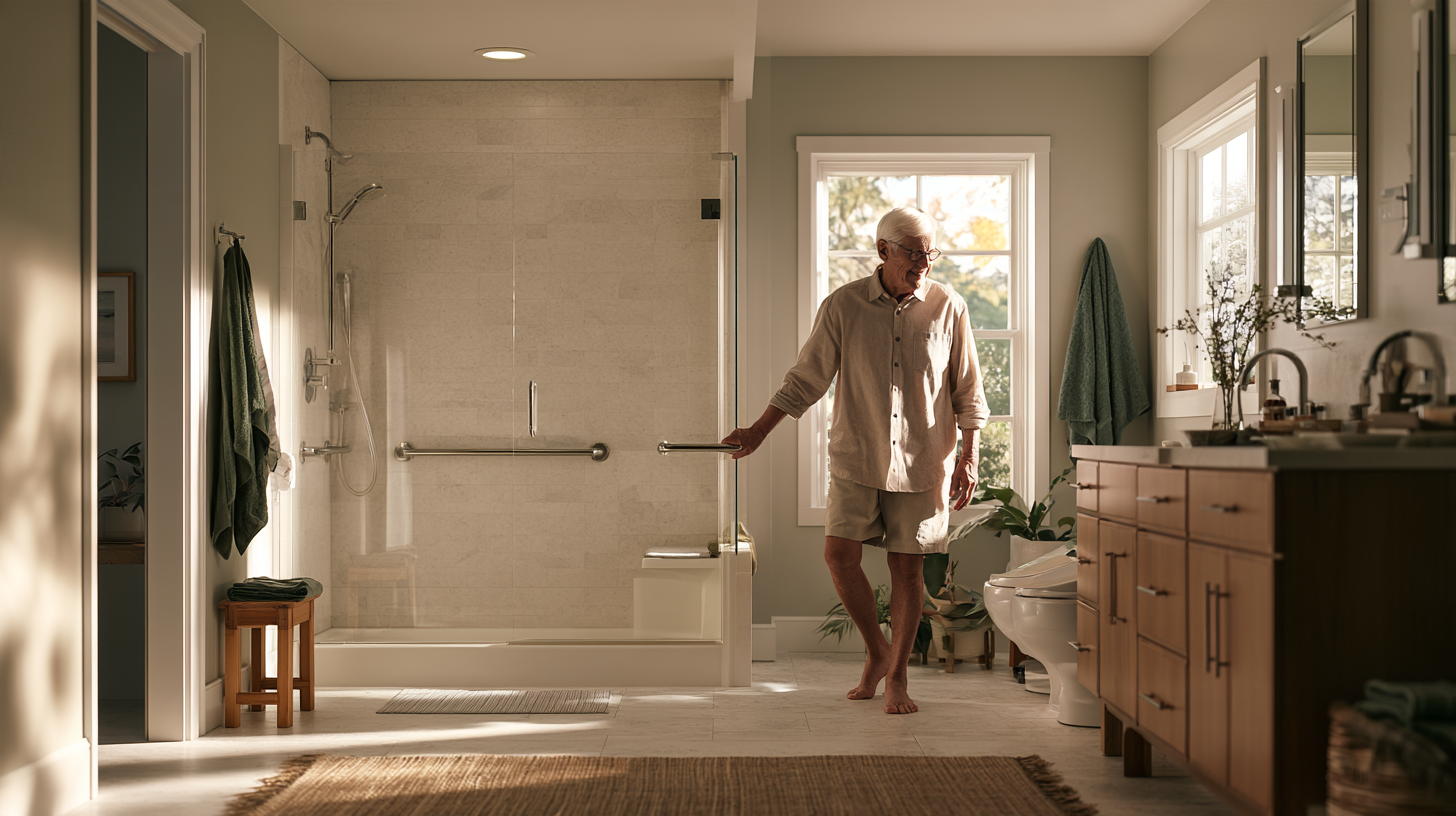
Most homes weren't designed with later life in mind. Stairs without a second handrail, a slippery bathroom floor, a dim hallway at night. None of these seem like a problem until they suddenly are.
The good news is that many of the most useful changes are small, inexpensive and quick to make. A few afternoons of work can make a home safer, easier to live in and better suited to the years ahead.
This guide walks through a practical, room-by-room checklist, with extra tips for homes where someone is living with memory changes.
Why home safety matters
Falls are the biggest safety risk for older adults at home. According to the CDC, there are about 4.5 million emergency department visits each year due to falls among older people, and falls cause most hip fractures.
Many of the things that contribute to falls can be changed. The CDC's Check for Safety checklist points out that falls are often caused by hazards that are easy to overlook but easy to fix.
Home safety isn't only about falls, though. Good lighting, easy-to-use fittings and a clear layout also help people stay confident and independent in their own space. Our article on aging in place covers the bigger picture, including health, social connection and planning ahead.
Start small
You don't need to do everything at once. AARP's aging in place checklist suggests starting with the rooms you use most and whatever feels hardest right now, like getting up the stairs or reaching high shelves. Then move on to bigger projects over time.
A good first step is a walk through the home, ideally with the person who lives there. Look at it with fresh eyes. Where do they hold onto furniture to steady themselves? Where is it dark? What's hard to reach?
Room-by-room checklist
Entrances and outside
Make sure there's at least one entrance without steps, or add a ramp if needed.
Keep steps in good repair, with no loose stones or rotten wood.
Add sturdy handrails on both sides of outdoor steps.
Install outdoor lights that come on automatically when it gets dark.
Put a bench or chair near the front door for taking shoes on and off.
Clear leaves, moss and tripping hazards from paths.
Hallways, stairs and floors
Remove clutter, cords and loose items from walkways.
Remove small scatter rugs, or secure rugs with non-slip backing.
Make sure stairs have a secure handrail, ideally on both sides.
Light stairs well, with switches at the top and bottom.
Mark the edge of each step with contrasting tape if steps are hard to see.
Keep stairs completely clear of shoes, books and bags.
Bathroom
The bathroom is one of the areas people most want to update. AARP's survey found that 72 percent of those planning home modifications want to improve the bathroom.
Install grab bars in the shower and beside the toilet. Towel rails aren't designed to take a person's weight.
Use non-slip strips on the floor of the shower or bath.
Consider a walk-in shower, a shower chair and a handheld showerhead.
Use a raised toilet seat or taller toilet if sitting and standing is hard.
Choose lever-style taps, which are easier on stiff hands.
Add a night light to light the way at night.
Kitchen
Keep everyday items between waist and shoulder height to avoid bending and reaching.
Add pull-out drawers or shelves to deep cupboards.
Choose a stove with safety features, such as automatic shut-off or an alert when a burner is left on.
Check smoke alarms and carbon monoxide detectors regularly.
Avoid step stools. If something is hard to reach, move it lower.
Bedroom
Keep a lamp, phone and torch within reach of the bed.
Use night lights or motion-sensor lighting between the bed and bathroom.
Make sure the bed is at a comfortable height for getting in and out.
If stairs are becoming hard, consider moving the bedroom to the ground floor.
Living areas
Arrange furniture so there's a clear path through the room.
Choose chairs with armrests, which make it easier to sit and stand.
Keep electrical cords along walls, not across walkways or under rugs.
Light rooms evenly, and put switches near entrances.
Extra tips for someone with memory changes
If someone is living with dementia or mild cognitive impairment, a few extra steps can make home easier and safer:
Keep things consistent. Try not to move furniture or change the layout too often.
Use labels and pictures. Simple signs on cupboards, drawers and doors help people find what they need. Our guide to dementia-friendly signage explains how.
Improve contrast. A coloured toilet seat or contrasting plates can be easier to see.
Store hazards safely. Keep medications, cleaning products and sharp tools in a secure place.
Build a routine. A steady daily rhythm reduces confusion. Our article on creating routines that make life easier has practical ideas.
Don't forget the person
Home changes work best alongside good health habits. The CDC recommends a few simple steps that go hand in hand with a safer home:
Ask a doctor or pharmacist to review medications, since some can cause dizziness or drowsiness.
Get eyes checked every year and update glasses.
Stay active with exercise that builds strength and balance.
Wear supportive, well-fitting shoes inside and out.
Our article on balance problems in later life explains more about what causes unsteadiness and how to improve it.
A safe home is one part of staying independent. Elli Cares helps with the daily routines that go alongside it, with medication, appointment and daily reminders, including video reminders from someone familiar, and a simple daily wellbeing check-in. Family members in the care circle can see how the day is going and add notes, such as a near-miss on the stairs, to share with the doctor. See how Elli supports seniors and families.
Technology that can help
Some technology can make a home safer and easier to manage:
Automatic and voice-controlled lighting so nobody has to walk into a dark room.
Video doorbells so it's easy to see who's at the door without getting up.
Medical alert devices that can call for help after a fall.
Reminder apps that help with medications and appointments.
Our guide to smart home devices that support independent living covers these in more detail, and our article on universal design explains how good design helps people of all ages.
Where to get help
You don't have to do it alone. An occupational therapist can assess the home and recommend changes that suit someone's specific needs. Ask a doctor for a referral.
In the US, the Eldercare Locator (800-677-1116) can point you to local programmes that help with home repairs and modifications, as well as other services for older adults.
A home that works for years to come
A safer home doesn't have to look clinical. Many of the best changes, like better lighting, lever handles and a walk-in shower, simply make a home more comfortable for everyone. Start with one room, fix the easy things first, and keep going a step at a time.
If you'd like support with daily routines alongside a safer home, visit our Seniors and Families page.