
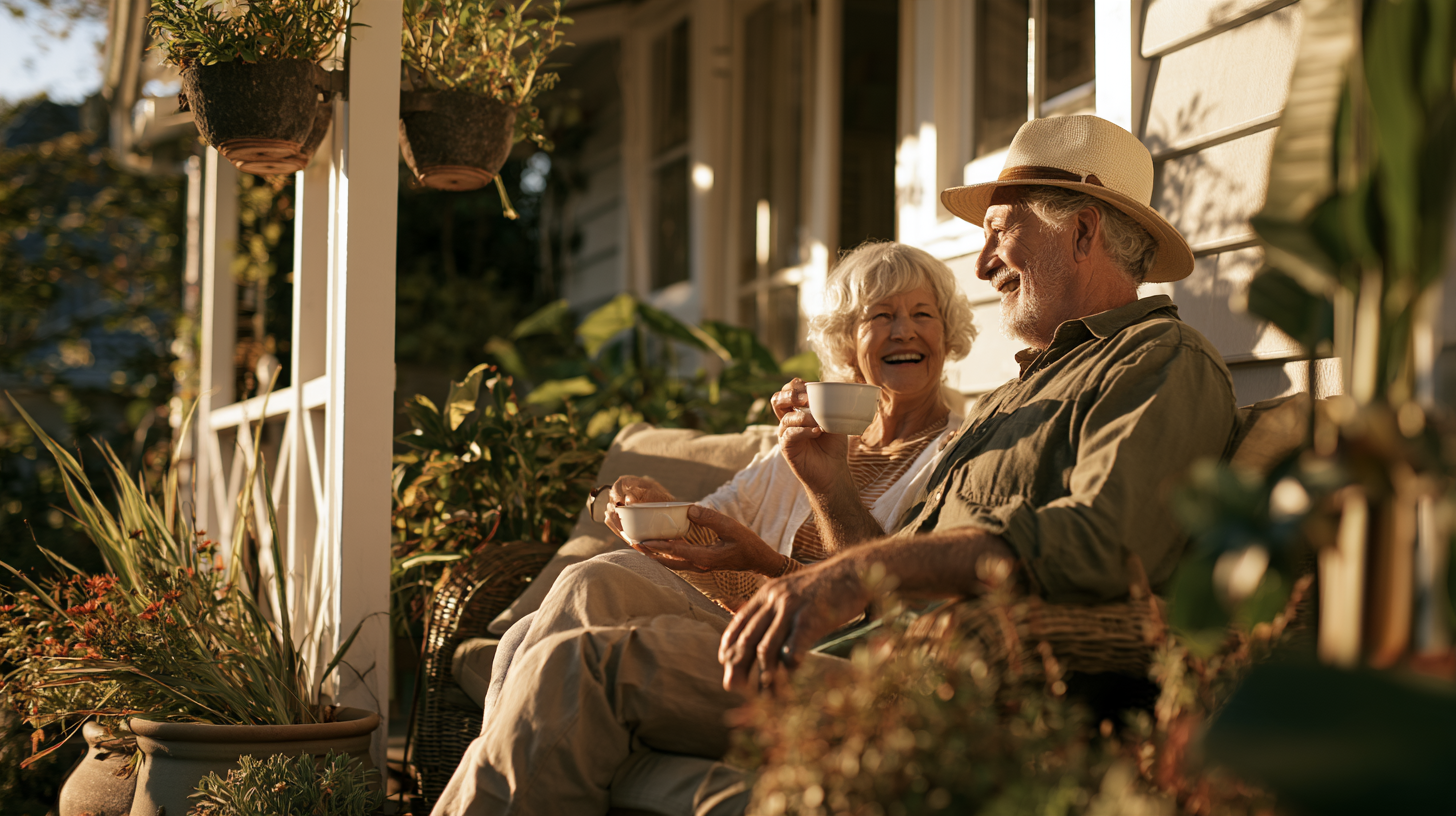
Ask most people where they want to grow old, and the answer is simple: at home. Their own kitchen, their own garden, the neighbours who wave on the way past. Home holds a lifetime of routines and memories, and for many people it's closely tied to feeling like themselves.
Staying at home as you get older is called aging in place. It's what most older adults want. But it works best when it's planned, not left to chance. That means thinking about the house itself, and also about health, social connection and the support someone may need over time.
This guide looks at why aging in place matters, the common challenges, and practical steps older adults and families can take to make home a safe and happy place for as long as possible.
Why most people want to age in place
The wish to stay at home is strong and consistent. AARP's 2024 Home and Community Preferences Survey found that 75 percent of adults aged 50 and over want to remain in their current homes as they age, and 73 percent want to stay in their communities.
The reasons are easy to understand:
Independence. Home is where people make their own decisions about their day.
Familiarity. Knowing where everything is makes life easier, and this matters even more for someone with memory changes.
Connection. Neighbours, local shops, a place of worship or a regular café all help people feel part of something.
Routine. Personal habits and rhythms are easier to keep in a place you know.
The same survey also found a gap between hope and reality. Nearly half of adults 50 and over expect they'll have to move at some point, often because of housing costs, and 51 percent say they need a home that better supports independent living. Planning ahead can help close that gap.
Aging in place isn't just about the house
It's easy to think of aging in place as a list of home modifications. Grab bars and ramps do matter. But the people who age well at home usually have a few other things in place too.
Health that's managed well. Regular check-ups, a clear medication routine and attention to changes in eyesight, hearing, balance and memory.
Social connection. Regular contact with family, friends and community. Living alone doesn't have to mean being lonely, but it does raise the risk.
Practical support. Help with the things that become harder, such as shopping, cleaning, gardening or getting to appointments.
A plan for the future. An honest conversation about what might change, and what would happen if more help were needed.
The biggest risks, and how to reduce them
Falls
Falls are the leading cause of injury for older adults. According to the CDC, about 4.5 million emergency department visits each year are due to falls among older people. Falls are also the most common cause of traumatic brain injury in older adults.
The encouraging news is that many risk factors can be changed. Clearing clutter, improving lighting, fitting grab bars and handrails, reviewing medications with a doctor and staying active to build strength and balance all help. Our guide to making your home safe for aging in place has a room-by-room checklist, and our article on what causes balance problems in later life explains how to address them.
Loneliness and isolation
Loneliness is one of the less visible risks of living alone, but it matters for health. A 2020 report from the National Academies of Sciences, Engineering, and Medicine found that social isolation and loneliness in older adults are linked to a higher likelihood of early death, dementia and heart disease.
Staying connected might mean a regular phone or video call, a weekly outing, a club or class, or simply getting to know the neighbours. Our article on tackling loneliness in later life has more ideas.
Missed medications and appointments
As routines get busier or memory changes, it becomes easier to miss a tablet or forget an appointment. Simple systems help: a weekly pill organiser, a calendar in a prominent spot, and reminders on a phone or tablet.
Changes in memory
For people living with dementia, aging in place can still be possible, particularly in the early stages. Familiar surroundings can be reassuring. It helps to keep the layout of the home consistent, label cupboards and rooms, and build a steady daily routine. Our guide to dementia-friendly signage shows how simple labels can make home life easier.
Elli Cares supports older adults to stay independent at home. Medication, appointment and daily reminders, including video reminders recorded by someone familiar, help keep routines on track, and a simple daily wellbeing check-in shows family how the day is going. Family members in the shared care circle can stay involved from anywhere and bring a clear record to the next doctor's appointment. See how Elli supports seniors and families.
How families can help
Supporting someone to age in place is often a family effort. A few things make a big difference:
Have the conversation early. Talk about what matters most to your parent, what worries them and what they'd want if things change. It's easier to plan before there's a crisis.
Walk through the home together. Look for hazards and small improvements, and let your parent lead the decisions about their own space.
Share the load. Agree who helps with what, whether that's shopping, appointments or a daily check-in call.
Respect independence. The aim is support, not taking over. Offer help in a way that keeps your parent in charge.
Know where to find help. In the US, the Eldercare Locator (800-677-1116) connects families with local services, including home care, meals, transport and home modification programmes.
Technology can also help. Our article on smart home devices that support independent living covers practical options, from automatic lighting to video doorbells.
Knowing when more support is needed
Aging in place doesn't mean doing it all alone, and it doesn't have to be all or nothing. Many people stay at home for years with the right mix of family support, community services and in-home care.
There may come a point where more help, or a move, makes sense. Signs to watch for include repeated falls, weight loss, missed medications, a home that's becoming hard to manage, or growing isolation. If that happens, it's worth talking openly as a family and with a doctor. Our guide to downsizing tips can help if a move is on the table.
Home, on your own terms
For most people, home is about more than four walls. It's about independence, identity and the comfort of the familiar. With some planning, a few changes to the house and the right support around them, many older adults can stay safely and happily at home for a long time.
If you'd like to see how Elli Cares can help with daily routines and keep families connected, visit our Seniors and Families page.

